


- An international maritime trade centre during the Harappan era
- Remarkable dockyard and well-planned urban infrastructure
- Fresh excavations underway to uncover new historical evidence
— News Coverage from Lothal, Gujarat by Journalist Swamy Muddam
Ahmedabad: In the modern world, maritime trade, ports, urban planning and drainage systems are considered symbols of advanced technology and engineering. Yet, nearly 4,500 years ago, people in the Indian subcontinent had already developed sophisticated systems for trade, water management and urban living. Gujarat’s Lothal stands as a remarkable testimony to this ancient achievement.
Located around 80 kilometres from Ahmedabad on the banks of the Bhogavo River, Lothal emerged as an important trading centre of the Indus Valley or Harappan Civilisation. Archaeological evidence indicates that between around 2500 and 1900 BCE, the settlement maintained maritime and commercial links with regions of West Asia.
An Ancient City Unearthed Through Excavations
Lothal’s historical significance came to greater prominence following excavations conducted between 1955 and 1962 under the leadership of archaeologist Dr. S. R. Rao.
The excavations revealed a range of structures, including roads, drainage systems, warehouses, residential areas, bead-making workshops and the famous dockyard. These remains provide valuable insights into the lifestyle, economic activities and technological capabilities of the Harappan people.
Over thousands of years, changes in sea levels and shifts in river channels altered the region’s water connections. Although the waterways that once supported Lothal’s maritime activities are no longer present in the same form, substantial remains of the ancient settlement can still be seen today.
Archaeological authorities have also resumed excavations in the area to investigate newly identified remains and search for further evidence about the settlement.
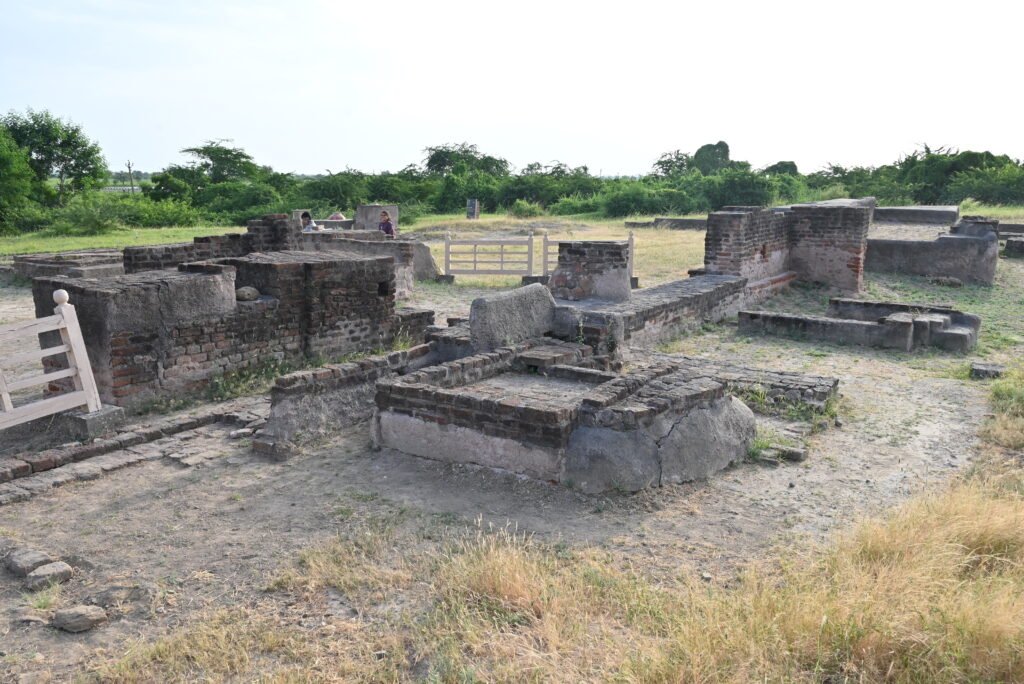
One of the World’s Ancient Artificial Dockyards
One of Lothal’s most remarkable features is its ancient dockyard. The large brick-built structure is recorded in archaeological studies as measuring approximately 214 metres in length and 36 metres in width.
Its design is believed to have been intended to accommodate changes in water levels and manage the movement of water. The remains indicate that considerable attention was given to water flow and the functioning of the dock.
The dockyard has therefore become one of the most important features associated with Lothal’s role in the maritime history of ancient India.
Extensive Trade Links with West Asia
Lothal was not merely a local marketplace. Archaeological evidence suggests that it developed into a major trading centre with links to distant regions.
Beads, semi-precious stone objects, metal products, ivory artefacts and other manufactured goods found at the site point to extensive craft and commercial activity. Archaeological evidence has also been used to establish connections between Lothal and regions associated with Mesopotamia, Iran and the Persian Gulf.
Foreign seals and artefacts, along with objects showing connections with other regions, provide further evidence of the settlement’s participation in long-distance trade networks.
A Carefully Planned Urban Settlement
Another striking feature of Lothal is its urban planning.
The settlement appears to have incorporated elevated areas and protective structures designed, among other purposes, to deal with flooding. Archaeological remains indicate a division between an elevated part of the settlement and a lower town.
The Acropolis — The Elevated Area
The elevated section contained residential structures and civic facilities, including bathing areas, wells and drainage arrangements.
The presence of organised drainage channels and systems for carrying wastewater away from residential areas demonstrates the importance given to sanitation and water management.
A large warehouse was also located in the settlement. Archaeological studies describe a structure measuring approximately 49 by 40 metres, supported by 64 brick platforms, reflecting the scale of commercial activity at Lothal.
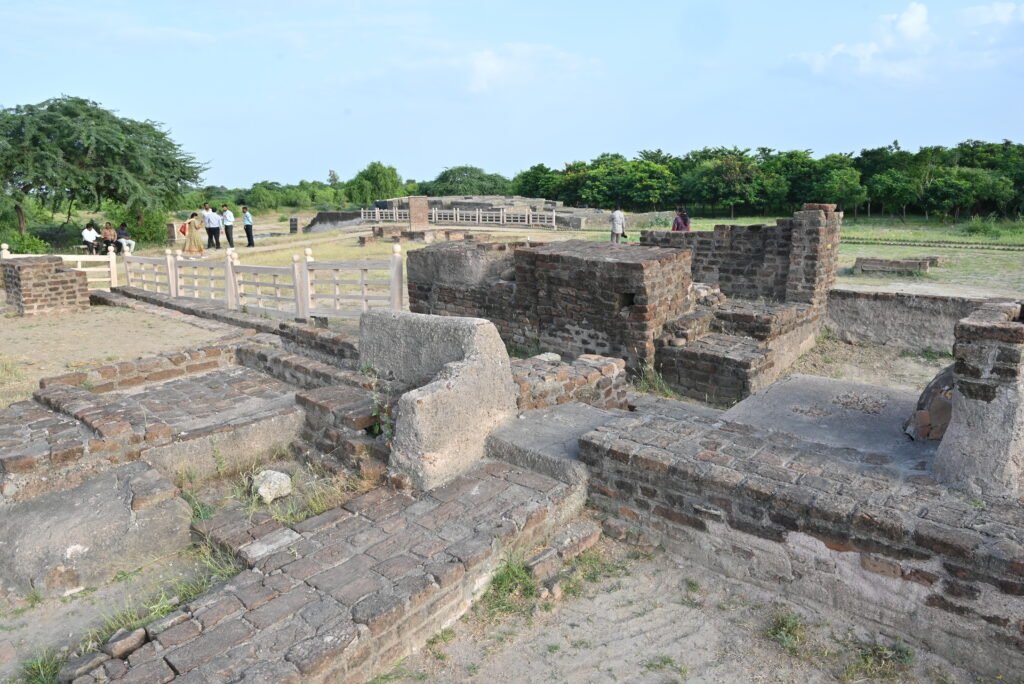
The Lower Town — Centre of Traders and Craftspeople
The lower town appears to have been home to traders, craftspeople and people engaged in various occupations.
Uniformly measured houses, organised streets, workshops and drainage systems indicate a well-planned urban environment. The evidence suggests that Lothal was not simply a settlement but a complex economic and industrial centre.
Engineering Skills Thousands of Years Ago
The remains of Lothal demonstrate that Harappan communities were engaged in much more than agriculture and traditional crafts.
Their achievements extended to water management, dock construction, urban planning, drainage, warehousing and specialised manufacturing.
The construction of a dockyard designed for maritime activities and the apparent efforts to manage water levels demonstrate the considerable engineering knowledge possessed by the people of the period.
The latest excavations are expected to provide researchers with additional clues about the settlement, its economy and its links with other ancient civilisations.
A Key Address in India’s Maritime History
Modern ports and maritime trade hubs play a crucial role in India’s economy today. Lothal serves as a reminder that the country’s maritime and commercial traditions have roots stretching back thousands of years.
The area where ships once moved, streets where traders travelled, warehouses where goods were stored, workshops where artisans produced beads and structures designed to manage water have now become archaeological remains. Yet, they continue to offer important evidence of the technological and economic capabilities of an ancient civilisation.
Lothal brings together, at a single archaeological site, the story of ancient urban planning, international trade, maritime engineering, craftsmanship and human civilisation.
More than a symbol of India’s ancient heritage, Lothal represents an important chapter in the global history of maritime trade and early urban civilisation.

