
- Swamy Muddam
There was a time when creating social change required massive movements, public meetings, rallies, newspapers, and television debates. Today, the situation has completely changed. A smartphone and an internet connection are enough for an ordinary individual to influence millions across the world. This is the digital media revolution.
The recent “Cockroach Janta Party” phenomenon is a clear example of this new era. The outrage among unemployed youth over a controversial remark made by a Supreme Court judge quickly transformed into a nationwide digital movement within hours through social media platforms. Without traditional political structures, offices, or huge financial backing, millions of young people united through Instagram, X, YouTube, Reels, memes, and AI-generated content. This is the true power of digital media.
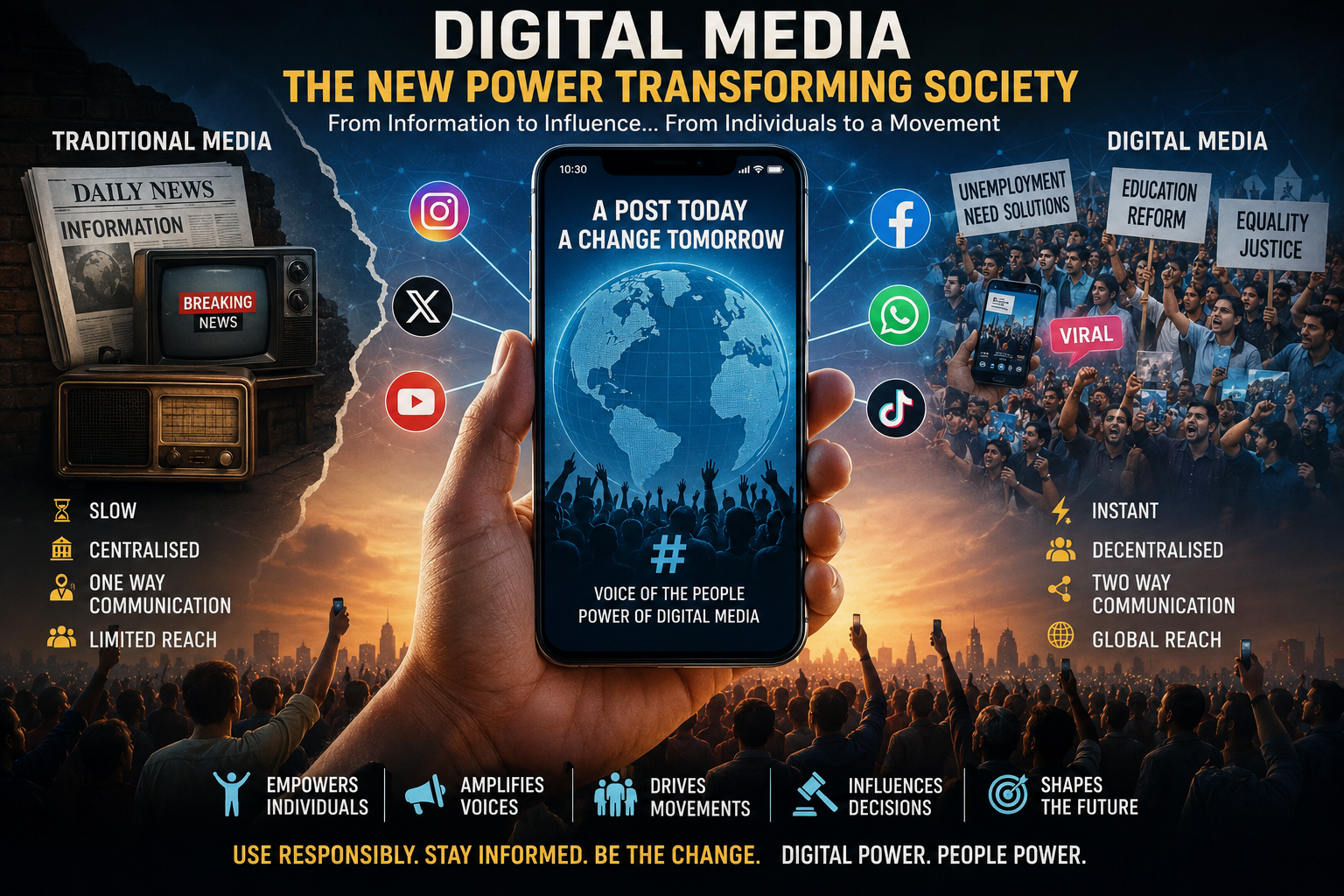
Print media once guided society with depth and credibility. Electronic media brought speed and visual impact. But digital media has placed the power of communication directly into the hands of the people. Today, every individual can become a reporter, analyst, activist, and content creator. Information no longer flows in a single direction. It is now created, shared, and amplified by the public itself.
A newspaper story may take hours to publish. Television debates require scheduling and production time. But digital media reacts instantly. A single reel, hashtag, or viral video can trigger global conversations within minutes. From the Arab Spring movement to the #MeToo campaign, from farmers’ protests to election campaigns, digital media has emerged as a force capable of influencing governments, politics, and public opinion worldwide.
The Gen-Z generation is using this power more effectively than ever before. Through satire, memes, AI-generated visuals, and short-form videos, young people are bringing serious social issues into mainstream discussion. Unemployment, corruption, educational failures, inequality, and systemic injustice are no longer confined to discussions in classrooms or television studios. They are turning into viral digital movements.
One of the greatest transformations brought by digital media is the removal of geographical boundaries. An incident in a remote village can become an international debate within hours. A video created by an unknown youngster can attract the attention of global leaders. This level of reach and influence is something traditional print and electronic media often struggled to achieve.
However, this immense power also comes with serious challenges. Fake news, misinformation, online hate campaigns, trolling, and manipulated narratives can create social unrest and confusion. A single misleading post can influence public emotions on a massive scale. That is why responsible usage of digital media has become more important than ever.
Yet one reality is becoming increasingly clear: the future belongs to digital platforms. Media is no longer limited to newspapers or television channels. Social media platforms are now shaping public opinion, political narratives, consumer behavior, and social movements. From elections to activism, digital influence is growing rapidly across every sector of society.
In this new era, success will not belong merely to those who possess information, but to those who can use information quickly, creatively, responsibly, and effectively. Digital media is not just a platform for entertainment anymore. It is the new voice of democracy, a force capable of transforming societies and influencing the world.
Today, power no longer exists only within governments or institutions. It exists in the hands of the people. A single post, a hashtag, or a video can alter the direction of public discourse. When used responsibly, digital media strengthens democracy and empowers citizens. When misused, it can create chaos and division. That is why digital awareness and ethical responsibility have become essential in modern society.
– Swamy Muddam
Secretary, Telangana Digital Media Journalists Association
Hyderabad

