

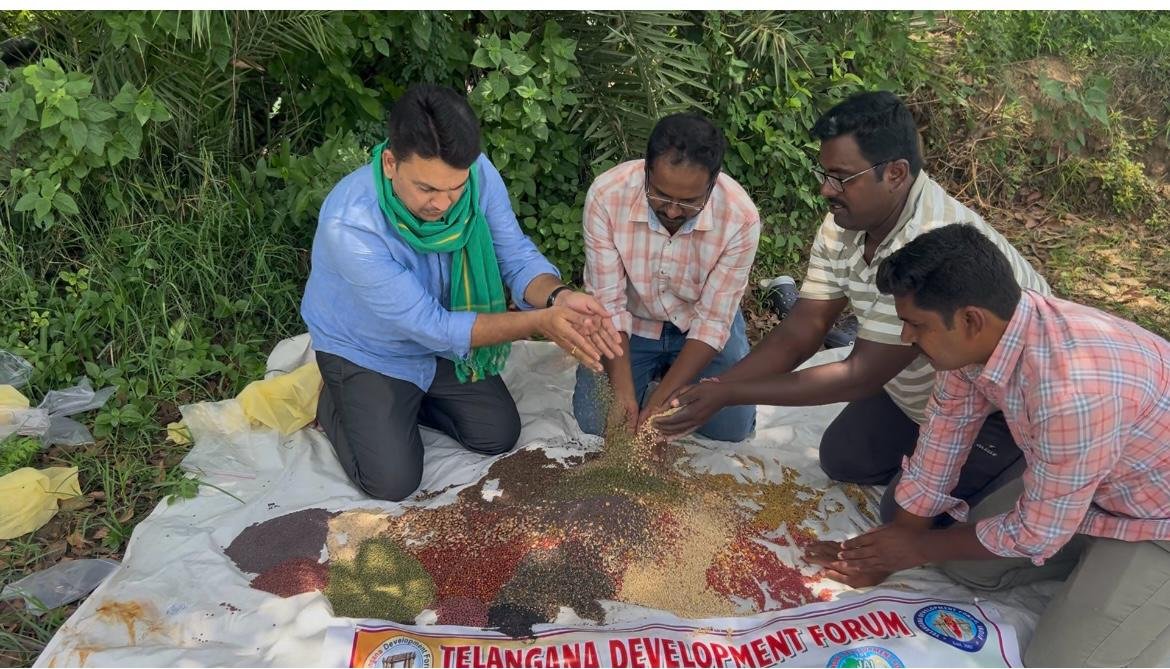
Hyderabad, Telangana: In response to rising soil degradation, escalating cultivation costs and increasing climate vulnerability in Telangana’s rapidly expanding paddy sector, the Telangana Development Forum (TDF), a non-governmental organisation, has successfully completed a pilot regenerative agriculture project during the Kharif 2025 season.
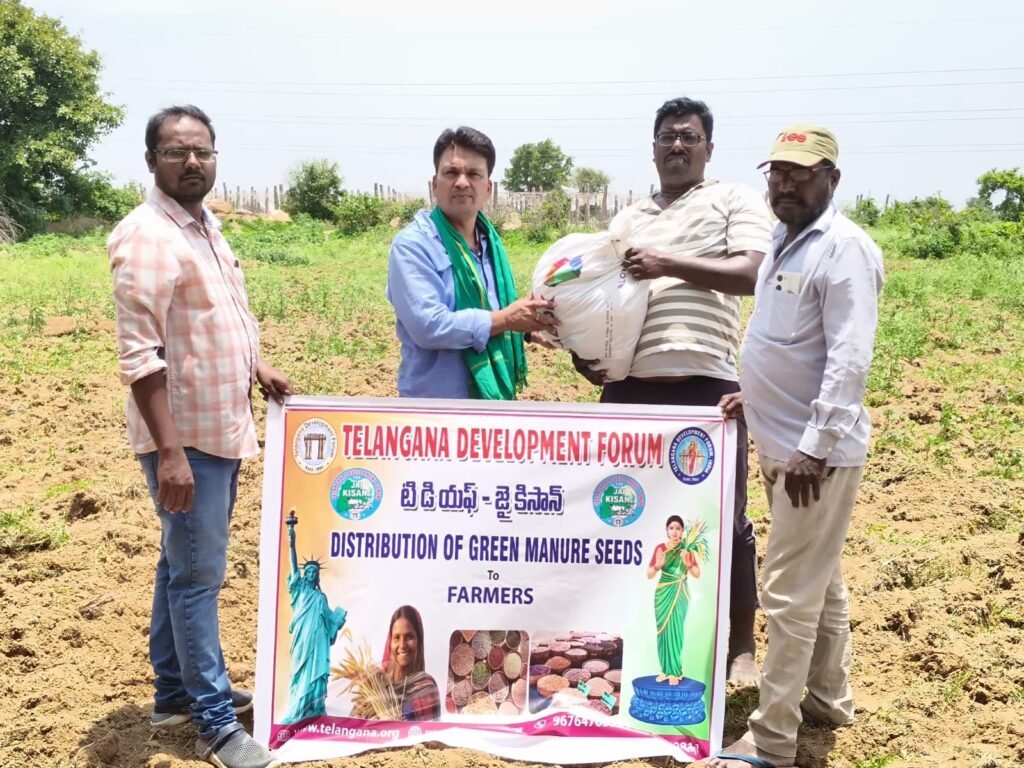
The pilot, implemented across Pedda Masanpally and Ibrahimpur villages in Siddipet district and Mustabad in Rajanna–Sircilla district, covered 10 farmers over 10 acres as demonstration plots. The initiative was led by TDF India President Sri Matta Rajeshwar Reddy, with technical support from the Agriculture Department of Telangana under the supervision of Agriculture Extension Officer (AEO) T. Nagarjun and TDF-India Jaikisan Head Sri Pati Narender.
Addressing Soil Degradation and Rising Costs
Telangana’s paddy cultivation area has expanded sharply from 22.7 lakh acres in 2014–15 to nearly 66 lakh acres in 2023–24. While this has boosted food production, continuous mono-cropping and heavy use of chemical fertilisers such as urea and DAP have resulted in declining soil organic carbon, nutrient imbalance, reduced microbial diversity and increased groundwater stress.
Baseline assessments of the pilot farms indicated low soil organic matter, high irrigation frequency and rising input expenditure, highlighting the urgent need for a sustainable alternative.
19-Crop Green Manure System Revives Soil Health
The project introduced a 19-crop multi-species green manure system, including cereals, millets, pulses, oilseeds, leafy vegetables, tubers, dhaincha and sunhemp. Cultivated for 45–60 days and incorporated at the flowering stage, the system generated approximately 2.3 tonnes of biomass per acre.
The biomass significantly improved soil porosity, moisture retention and organic matter content while enhancing rhizodeposition—root exudates that stimulate beneficial microbial activity in the rhizosphere. Laboratory CFU analysis of seven beneficial microbial groups confirmed a 2–3 times increase in microbial populations. Soil testing was conducted under the supervision of Sri Sudha Reddy, Founder and Managing Director of KN Biosciences (India) Pvt Ltd.
Natural Farming Reduces Chemical Dependence
Farmers adopted locally prepared microbial formulations and eliminated synthetic fertilisers and pesticides in the pilot plots. Field observations recorded improved soil aggregation, better root penetration, increased earthworm activity, reduced pest incidence and lower standing water requirements.
Irrigation cycles reduced from 28–30 per season to around 22, resulting in 20–25 percent water savings. The shift to on-farm inputs lowered natural input costs by 30–50 percent and reduced total cultivation costs by ₹4,000–₹8,000 per acre. Net farmer income increased by ₹6,000–₹12,000 per acre, while dependence on input credit declined.
Satellite and AI-Based Precision Advisory
To strengthen the regenerative model, TDF collaborated with Krishivaas Smart Agri Solutions to deploy satellite-based precision advisories and AI-driven disease detection tools. Through the Krishivaas Smart App, farmers received satellite-based crop health monitoring, 3×3 metre grid-level field analytics, AI-based early disease alerts (7–10 days in advance), precision irrigation scheduling and real-time advisories in farmer-friendly formats.
Participating farmers reported early stress detection, reduced pesticide use, lower irrigation and labour costs, and improved soil health. More than 80 percent adopted precision nutrient advisories, with 100 percent satellite monitoring coverage in pilot plots.
Measurable Impact and Climate Alignment
Key outcomes of the pilot include:
Soil Organic Carbon increase of 0.2–0.4 percent within two seasons
50–100 percent reduction in chemical fertiliser use
20–30 percent water savings
Improved biodiversity indicators including earthworms and beneficial microbes
10–15 percent higher resilience under climate stress
Increased participation of women in bio-input preparation
Digital advisory adoption among rural youth
The project employed soil testing, microbial CFU analysis, biomass estimation through crop-cutting plots, satellite monitoring and farmer field records, with third-party evaluation planned.
Roadmap for Expansion
Encouraged by the results, TDF plans cluster-based expansion across Telangana through CSR partnerships and government collaboration, promoting chemical-free food value chains while restoring soil health and conserving water.
“This regenerative paddy model provides a practical pathway to transition from input-intensive mono-cropping to soil-restoring, water-efficient and climate-resilient farming,” said Sri Matta Rajeshwar Reddy, TDF India President. He added that TDF aims to extend the model across mandals and districts in Telangana with CSR funding and government support.
As Telangana balances high rice production with ecological sustainability, the pilot offers a scalable, data-driven solution to secure farmer livelihoods while protecting long-term agricultural resources.

